
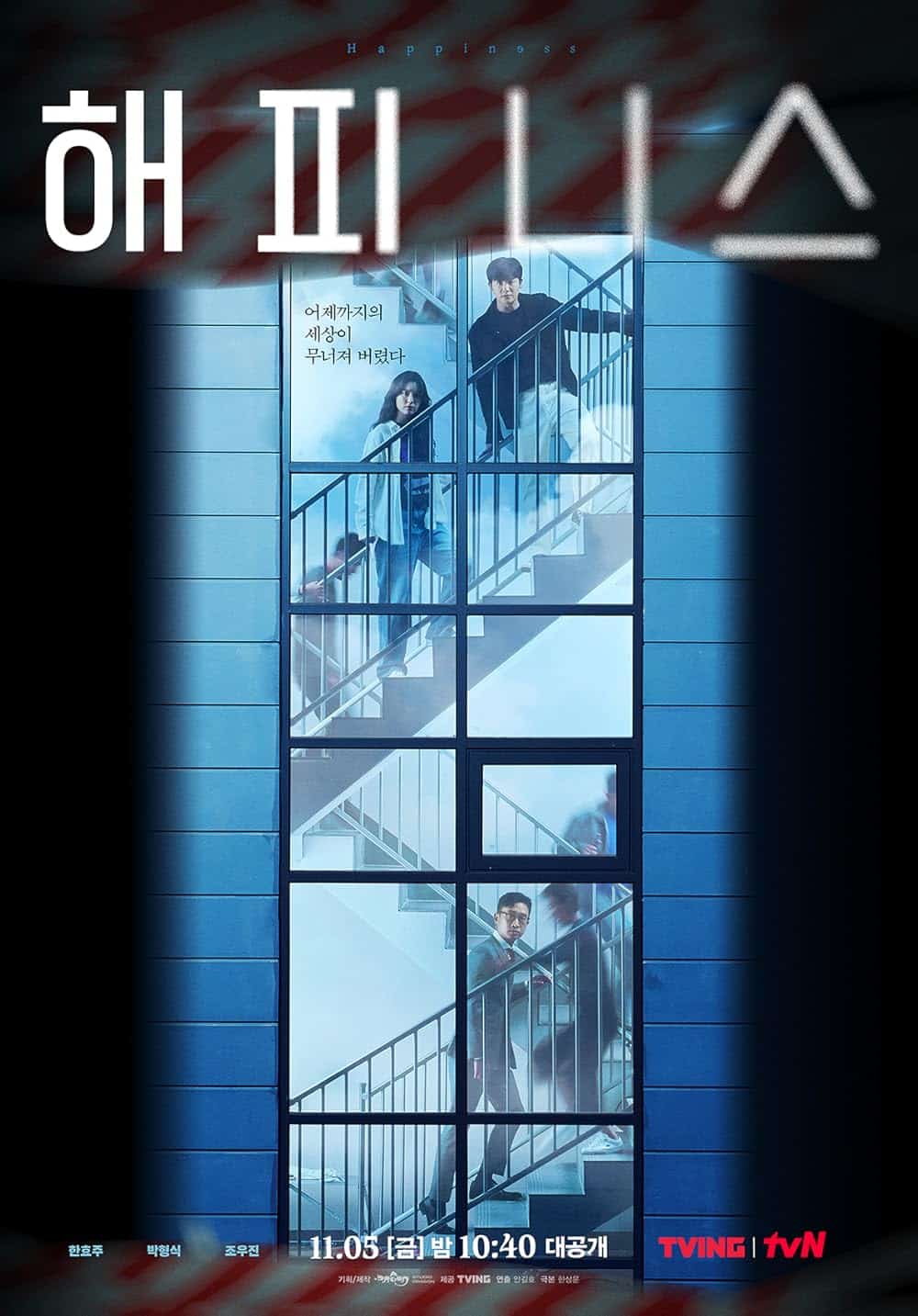
Hello, everyone! How are you? Today, I’m excited to share my thoughts on the series Happiness, which stands out as a remarkable and socially aware zombie thriller on Netflix, intertwining horror with insightful commentary on contemporary society and class disparities.
Advertisements
Happiness debuted in November 2021 on tvN and was subsequently made available on Netflix, consisting of 12 episodes that run approximately 65 minutes each. This Korean drama was crafted by writer Han Sang-woon and directed by Ahn Gil-ho, both known for their contributions to critically acclaimed series.
Set in a near-future Korea, this zombie thriller introduces a new drug called “Next” that induces zombie-like symptoms, confining residents of a luxury apartment complex during a citywide lockdown. The series adeptly merges horror, social satire, and romantic drama, using the backdrop of a zombie apocalypse to delve into issues of class inequality, human nature, and societal collapse.
What makes this show distinct is its focus on psychological tension and social interactions rather than conventional zombie action, crafting a claustrophobic setting that reflects real-world anxieties surrounding pandemics, isolation, and community disintegration.
Human Nature Amidst a Pandemic Lockdown
Happiness revolves around Yoon Sae-bom and Jung Yi-hyun, two police officers who enter a pretend marriage to obtain an apartment in a high-end building. When a new synthetic drug named “Next” leads to violent, zombie-like behavior in users, the entire city is locked down, trapping the residents within their building.
As the infection spreads and resources dwindle, the true natures of the apartment residents come to light, bringing class divisions and personal biases to the forefront. The series examines how crises strip away social masks, revealing both the darker and brighter sides of human behavior.
Each episode uncovers layers of the residents’ personalities while heightening tension around the imminent infection threat, weaving a dual narrative about external zombie dangers and internal human monstrosities.
The Indomitable Spirit of Yoon Sae-bom
Han Hyo-joo delivers an outstanding performance as Yoon Sae-bom, a former military officer turned police detective who possesses natural immunity to the zombie virus. Her character symbolizes resilience, loyalty, and moral strength amid overwhelming chaos.
Sae-bom’s journey throughout the series illustrates her transformation from a self-centered survivor to a leader committed to protecting the entire community. Her fierce determination and steadfast moral principles make her a captivating protagonist who stands by her values, even when facing impossible choices.
Jung Yi-hyun’s Devoted Protection
Park Hyung-sik plays Jung Yi-hyun, a police detective who has harbored feelings for Sae-bom since high school and becomes her pretend husband to help her secure the apartment. His character exemplifies loyalty, sacrifice, and the strength of unconditional love during times of crisis.
Yi-hyun’s character arc delves into themes of protection, devotion, and moral ambiguity as he navigates the conflict between his duties as a police officer and his desire to ensure Sae-bom’s safety. His relationship with Sae-bom serves as the emotional foundation of the series, demonstrating how love can provide strength in humanity’s darkest hours.
The Ultimate Showdown of Humanity and Monsters
The series culminates in a dramatic showdown where the apartment residents must decide between self-preservation and collective survival. This confrontation involves not only battling zombie threats but also facing the human monstrosities that have surfaced during the crisis.
The final episodes expertly balance action sequences with emotional resolutions as characters confront the repercussions of their decisions throughout the lockdown. The climax questions whether humanity can transcend its worst instincts when confronted with extinction and whether community bonds can withstand ultimate trials.
The Apartment’s Diverse Community
Happiness showcases a varied cast of apartment residents representing various facets of Korean society, from affluent entitled families to struggling middle-class individuals. Characters such as the self-serving lawyer Oh Ju-hyung and the privileged housewife Han Tae-seok act as antagonists whose classist attitudes and self-interest foster internal conflict.
These supporting figures effectively demonstrate how crises unveil true character, with some rising to heroism while others succumb to selfishness and brutality, creating a microcosm of society’s reaction to disaster.
Netflix Success Story
Happiness achieved international acclaim on Netflix for its intelligent take on the zombie genre, celebrated for using horror elements to deliver astute social commentary on class inequality and community duty. The series was lauded for its realistic depiction of pandemic-like scenarios and lockdown psychology, resonating with global viewers who faced similar situations during COVID-19. Han Hyo-joo and Park Hyung-sik’s chemistry received widespread accolades, with many deeming their relationship as one of the most genuine romantic partnerships in recent K-drama. The show’s success showcased that zombie thrillers can be both entertaining and intellectually stimulating, elevating the genre beyond mere horror into meaningful social dialogue.
For those who appreciate zombie thrillers infused with profound social commentary and robust romantic elements, Happiness is an ideal series to binge-watch on Netflix.
A brilliant fusion of horror and social satire that leverages the zombie apocalypse to reveal the best and worst of human nature during a crisis.
Series Information:
- Number of Episodes: 12
- Platform: Netflix (originally tvN)
- Rating: 7.9/10 (IMDb)
- Genre: Zombie Thriller, Social Drama, Romance, Horror
- Protagonists: Han Hyo-joo (Yoon Sae-bom), Park Hyung-sik (Jung Yi-hyun)
- Antagonist: The Next virus/infected zombies, selfish residents like Oh Ju-hyung and Han Tae-seok who embody human greed and classism