
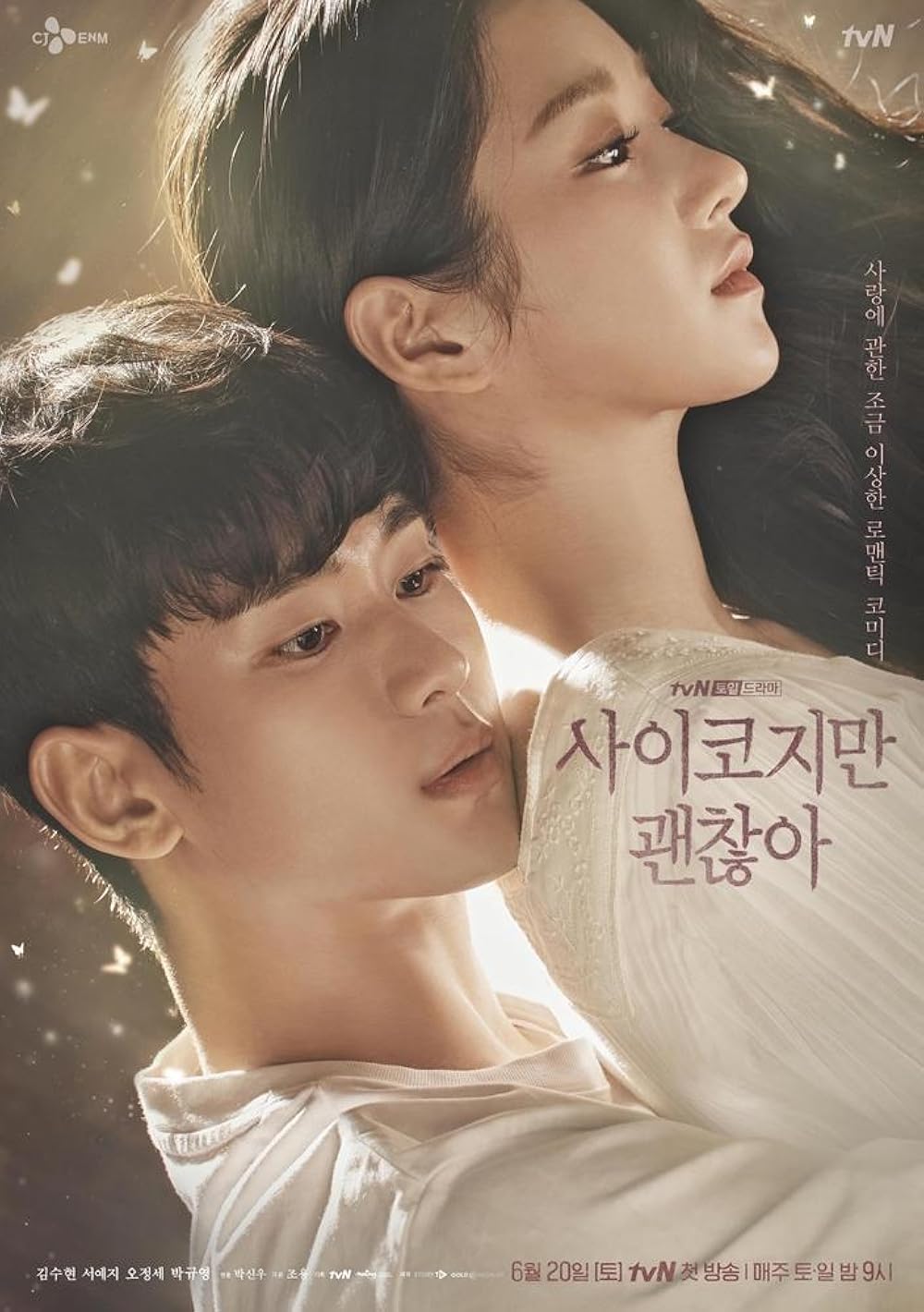
Hello, everyone! How are you doing? Today, I’m excited to share my thoughts on the drama It’s Okay to Not Be Okay, which has quickly become a favorite among Netflix’s global audience for Korean series.
Advertisements
This engaging psychological romance drama debuted in June 2020, consisting of 16 episodes, each around 70 minutes long available on Netflix. The series skillfully intertwines themes of mental health with elements of gothic fairy tales, offering a distinctive storyline that delves into trauma, recovery, and the strength of human relationships. Set in a psychiatric facility, the narrative follows the interconnected lives of three individuals as they assist one another in facing their innermost fears and emotional scars.
When Lost Souls Connect
The plot revolves around Moon Gang-tae, a caregiver in a psychiatric ward who has dedicated his life to looking after his autistic older brother, Sang-tae, while stifling his own aspirations and feelings. Their meticulously organized lives are turned upside down when they meet Ko Moon-young, a successful yet deeply troubled children’s author suffering from antisocial personality disorder. Moon-young becomes captivated by Gang-tae, pursuing him doggedly while he attempts to maintain distance to safeguard both himself and his brother.
As the lives of these three characters become more entangled, dark truths from their shared history begin to emerge. The series investigates how childhood trauma has influenced each character, unveiling connections that go beyond mere chance. Through Moon-young’s haunting fairy tale narratives and the brothers’ quest for self-discovery, the drama intricately weaves a story about facing inner demons and the journey toward healing.
Moon Gang-tae: The Caregiver’s Transformative Path
Gang-tae embodies the essence of the selfless caregiver who has lost touch with his own identity. His character arc skillfully portrays someone so committed to fulfilling others’ needs that he has neglected his own dreams and aspirations. Throughout the series, we witness him gradually recognizing his self-worth and his right to pursue happiness.
His bond with his brother Sang-tae serves as the emotional heart of his character development. The series treats their relationship with exceptional sensitivity, illustrating the beautiful connection they share while also depicting the genuine challenges of caregiving. Gang-tae’s journey towards establishing healthy boundaries while continuing to offer love and support generates some of the most heart-wrenching moments in the drama.
Ko Moon-young: The Complex Monster’s Journey to Healing
Moon-young stands out as one of the most intricate female characters in K-drama history. Initially perceived as a selfish and manipulative individual due to her antisocial personality disorder, the series gradually uncovers the profound trauma that drives her behavior and her authentic potential for growth and love.
Her character evolution is deftly portrayed, illustrating how someone seemingly devoid of empathy can learn to form genuine connections with others. Moon-young’s interactions with both brothers act as a catalyst for her transformation, as she begins to look beyond her own needs and comprehend the effects of her actions on those around her. Her progression from emotional solitude to authentic relationships constitutes one of the drama’s most fulfilling character arcs.
Facing the Shadow of the Butterfly
The series reaches a poignant climax when the truth about the characters’ shared traumatic history is unveiled. The mystery surrounding Moon-young’s mother and her link to the brothers leads to a climactic confrontation that compels all three main characters to face their most profound fears. This revelation not only clarifies their psychological scars but also offers a pathway to their healing.
The climax artfully intertwines fairy tale motifs with psychological authenticity, resulting in a resolution that feels both fantastical and emotionally genuine. The characters are required to confront both literal and metaphorical monsters to liberate themselves from the cycles of trauma that have shaped their lives.
A Supportive Community for Healing
The psychiatric hospital backdrop allows the series to showcase a diverse ensemble of supporting characters, each facing their own mental health trials. From patients to healthcare professionals, these characters enrich the narrative and lend authenticity to the storyline while reinforcing the drama’s central messages regarding the universality of emotional struggles.
Sang-tae’s portrayal is particularly commendable for its respectful and nuanced representation of autism. Rather than using his condition as a source of comic relief or mere inspiration, the series presents him as a fully developed character with his own dreams, fears, and agency within the story.
Netflix Triumph
It’s Okay to Not Be Okay achieved outstanding success on Netflix, becoming a worldwide sensation that introduced many viewers to Korean dramas. The series has been lauded for its bold treatment of mental health issues, breathtaking visuals, and remarkable performances. Its unique combination of psychological thriller aspects with romantic drama distinguishes it from traditional K-dramas, while its gothic fairy tale ambiance offers a one-of-a-kind viewing experience that resonates with audiences globally.
If you’re a fan of psychological dramas featuring intricate characters and meaningful themes, It’s Okay to Not Be Okay is an ideal series to binge-watch on Netflix.
A beautifully crafted series that demonstrates healing is achievable when we muster the bravery to confront our demons and find the right people to support us on our journey.
Série Detalhes:
Número de Episódios: 16 episodes
Plataforma: Netflix
Avaliação: 9.0/10 IMDb
Gênero: Psychological Romance, Drama, Thriller
Protagonistas: Kim Soo-hyun (Moon Gang-tae), Seo Ye-ji (Ko Moon-young), Oh Jung-se (Moon Sang-tae)
Antagonista: Mãe de Ko Moon-young (trauma passado / feridas psicológicas)