
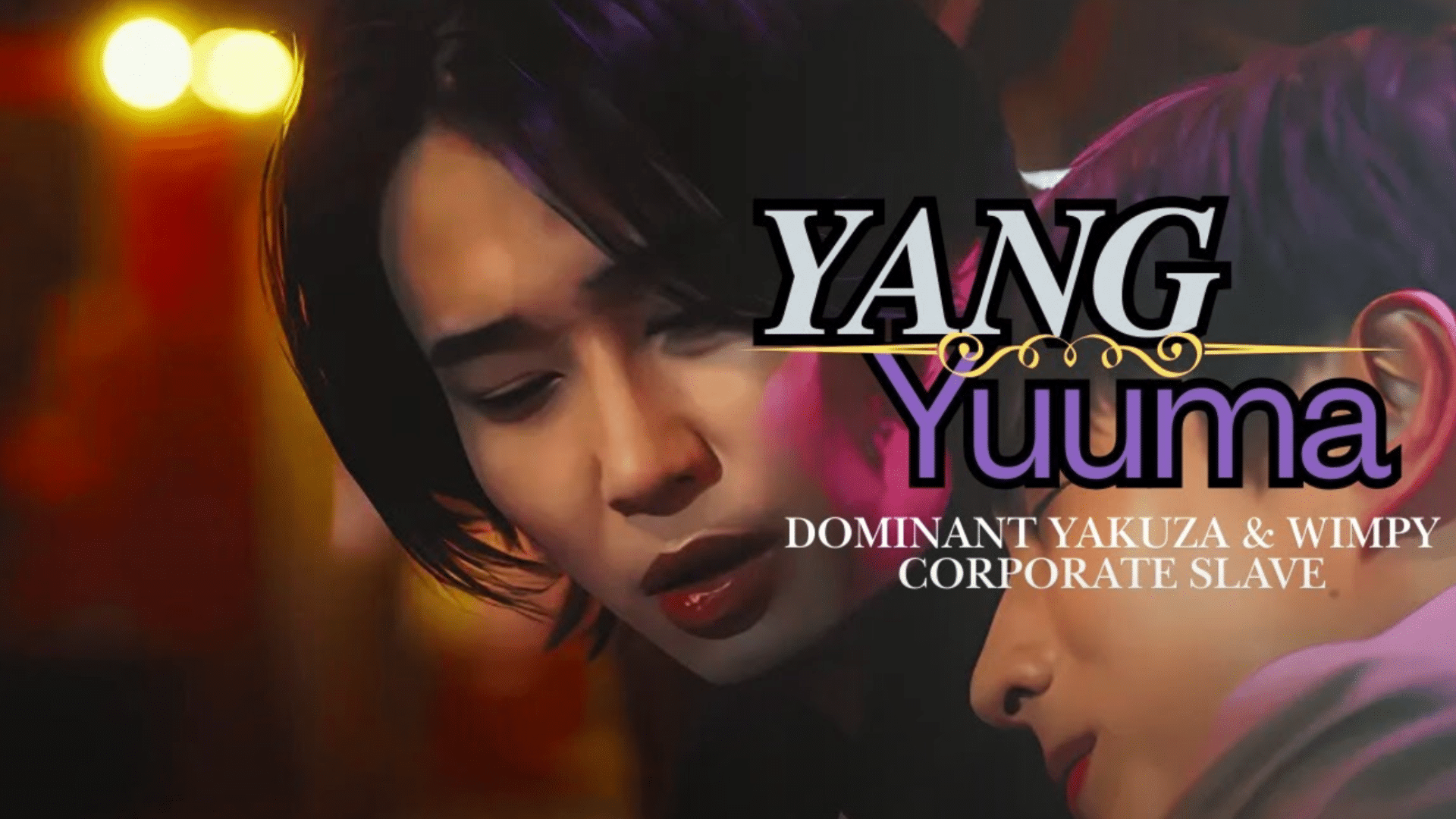
The Unconventional Romance of a Fearless Yakuza and a Submissive Corporate Worker: An Interplay of Love Across Divergent Realms
“The Unconventional Romance of a Fearless Yakuza and a Submissive Corporate Worker” (俺様ヤクザとヘタレ社畜~国を超えた仁義なき溺愛~) stands out as one of the most audacious and captivating offerings in the 2024 Japanese BL landscape, delving into the unexpected chemistry between two characters who embody the extremes of the Japanese social hierarchy. Adapted from the manga by Arin Himari, this series uniquely intertwines romance, societal tension, and character evolution, challenging both genre conventions and cultural expectations.
Advertisements
Story Foundation and Social Dichotomy
The narrative centers on Yang, a Taiwanese corporate worker reassigned to his company’s Japanese division, and Asuma, a formidable yakuza leader with his own moral compass. This scenario instantly sets up an intriguing interplay of power, vulnerability, and mutual attraction that defies cultural, social, and legal norms.
The stark contrast between the oppressive corporate landscape and the yakuza underworld, which adheres to its own principles of honor, serves as a rich setting for examining themes of societal conformity, personal identity, and the bravery needed to pursue one’s desires against societal expectations. The series does not glorify either environment but instead reveals both their complexities and contradictions.
Character Growth and Romantic Interactions
Yang epitomizes the typical oppressed “salaryman,” grappling with a demanding superior, extensive working hours, and the loneliness of being an outsider in a foreign land. His portrayal as “timid” does not equate to passivity; rather, it reflects a genuine vulnerability that resonates with many viewers experiencing similar modern corporate pressures.
Conversely, Asuma defies the usual yakuza archetype, blending physical intimidation with authentic, protective affection for Yang. Their initial spark arises from a candid moment of drunkenness when Yang calls Asuma “handsome”—a fleeting connection that transcends the societal facades they uphold.
The exploration of dominance and submission is handled with subtlety, where power is not merely defined by physical prowess or social standing but also by emotional openness and mutual trust. This nuanced approach elevates the narrative beyond clichéd “bad boy meets good boy” tropes, engaging in a more sophisticated examination of emotional compatibility.
Cultural and Linguistic Nuances
Incorporating Yang as a Taiwanese character enriches the narrative, shedding light on cultural disparities, language barriers, and the experience of being a foreigner in Japan. His occasional struggles with Japanese under pressure add authenticity to his character, creating both comedic and poignant moments.
The series also skillfully navigates the depiction of the yakuza world, steering clear of excessive glamorization while recognizing the codes of loyalty and honor inherent in this subculture. This balanced portrayal allows viewers to appreciate Yang’s attraction without condoning criminal behavior.
Production Quality and Techniques
As a short-form series comprising 10 episodes, each lasting roughly 3 minutes, “The Unconventional Romance” faces the formidable task of crafting a compelling storyline and authentic relationships within stringent time limits. The outcome is a concise yet surprisingly effective experience that optimizes every moment of screen time.
Takko Yoshida’s direction reflects an understanding of the format’s constraints, concentrating on pivotal moments of emotional growth and chemistry between the leads. Performances by Karuma (Asuma) and Ah Ben (Yang) effectively convey deep emotional layers and attraction, despite the limited duration.
Timeless Themes and Modern Significance
Beyond the core romance, the series tackles pressing issues such as work-related stress, social isolation, and the quest for genuine connections in rigid societies. Its subtle critique of Japan’s toxic work culture resonates particularly in a time when burnout and workplace mental health are increasingly relevant topics worldwide.
The investigation of relationships that defy social boundaries offers insights into societal rigidity and the potential for love and acceptance in unexpected circumstances. This thematic universality enables the series to transcend its specific cultural backdrop, appealing to a diverse audience.
Narrative Constraints and Untapped Potential
The significant drawback of the series lies in its notably brief runtime, which limits the development of secondary characters and a thorough exploration of the societal implications of the central relationship. Numerous viewers expressed a desire for a more expansive narrative that would fully develop its intriguing premises.
The rapid progression of the romance, while understandable given the time constraints, sometimes sacrifices emotional authenticity for the sake of narrative advancement. This limitation is particularly disheartening, considering the evident opportunity for a deeper dive into the protagonists’ dynamics.
Influence on the BL Genre and Innovation
“The Unconventional Romance” aids in the progression of the BL genre by tackling complex power dynamics without succumbing to problematic stereotypes. The characterization of Asuma as dominant yet respectful and Yang as submissive yet possessing his own agency provides a healthier framework for relationships within the genre.
Additionally, the series illustrates how the micro-episode format can effectively convey BL narratives when executed with precision and clarity. This model may inspire future productions facing similar budgetary constraints.
Audience Reception and Impact
The series garnered a positive response from BL enthusiasts who valued its distinctive premise and authentic chemistry between the central characters, despite the constraints of time. The faithful adaptation of Arin Himari’s manga proved that BL narratives with unconventional themes can resonate with audiences when handled with care and respect for the characters.
Concluding Thoughts
“The Unconventional Romance of a Fearless Yakuza and a Submissive Corporate Worker” presents an intriguing experiment in condensed BL storytelling, providing insights into a potentially rich narrative within significant time limitations. Although its brevity restricts a full exploration of its themes and characters, the series still offers sincere moments of emotional connection and romantic chemistry that validate its existence.
For fans of the BL genre who are willing to embrace format limitations for a unique premise and dedicated performances, the series delivers a fulfilling experience, even as it leaves viewers yearning for more development. Its contribution to the thematic diversification of the BL genre positions it as a noteworthy addition to the 2024 media landscape.
The series serves as a testament to the idea that true love can thrive in unlikely settings and that authentic human connections can overcome social, cultural, and linguistic divides—a universally relevant message conveyed through the specific framework of Japanese BL romance.